A chimney cap is the metal cover over the flue opening at the top of the stack. It keeps rain, snow, leaves, squirrels, and nesting birds out of the flue and its mesh sides stop burning embers from landing on the roof.…
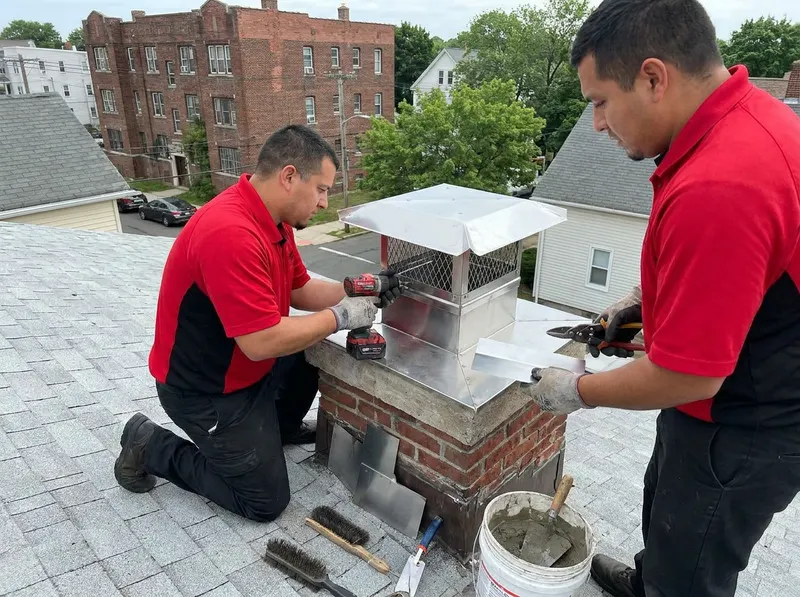
A chimney cap is the metal cover over the flue opening at the top of the stack. It keeps rain, snow, leaves, squirrels, and nesting birds out of the flue and its mesh sides stop burning embers from landing on the roof. When a coastal storm off Long Island Sound blows a cap off, a common call from Black Rock and the South End where wind hits the exposed rooflines near Seaside Park, the open flue lets water pour straight onto the smoke shelf and damper, which rusts steel parts and cracks masonry over one or two winters.
The right fix depends on what failed. If the cap itself is sound but the fasteners or friction fit worked loose, reattaching it with new stainless screws or a proper flue-liner clamp is the fastest and cheapest path, often part of a regular sweep visit. If the cap is rust-pitted, crushed, or blew off entirely and cannot be found, replacement is the correct call; a 304-grade stainless single-flue cap resists the salt air that eats galvanized caps in the East End and West End within a few seasons. Homes with two or three flues sharing one crown, common on older Hollow and Mill Hill masonry chimneys, usually need a custom multi-flue cap sized to the crown footprint, which is measured on site.
The crown is separate from the cap and often needs attention at the same time. The crown is the concrete or mortar slab that slopes water away from the flue tiles. Hairline cracks let water seep in and freeze, and in Fairfield County's freeze-thaw cycle those cracks widen every winter. Crown repair ranges from a brushed-on sealant coat over minor cracks to a full recast when the slab has spalled apart. A rooftop inspection determines whether the crown can be sealed or must be rebuilt, and that finding is shown in photos rather than described from the ground.
Cap and crown work is guided by NFPA 211, the standard for chimneys, fireplaces, and vents, and inspection follows the Chimney Safety Institute of America (CSIA) framework. A Level 1 inspection is a visual check of readily accessible parts and suits a cap that blew off with no other symptoms. A Level 2 inspection adds a camera scan of the flue interior and is appropriate after a chimney fire, a property sale, or when water has been entering an uncapped flue for a while. Every cap job here closes with photo proof of the installed cap and a clean work area, no black dust tracked through the living room, since cap work happens on the roof, not the firebox. A free on-site estimate confirms the exact price and scope before anything is ordered or installed.
Every job gets a firm, written price after a free on-site visit.
Tell us about your chimney cap repair & replacement job in Bridgeport and we'll send a clear, written quote, usually the same day.
 Sweepmaster Chimney Sweep