A leaking chimney rarely leaks where the stain shows up. Water enters at the top, a cracked concrete crown, a rusted or lifted flashing line where the chimney meets the roof, a missing rain cap, or brick that has…
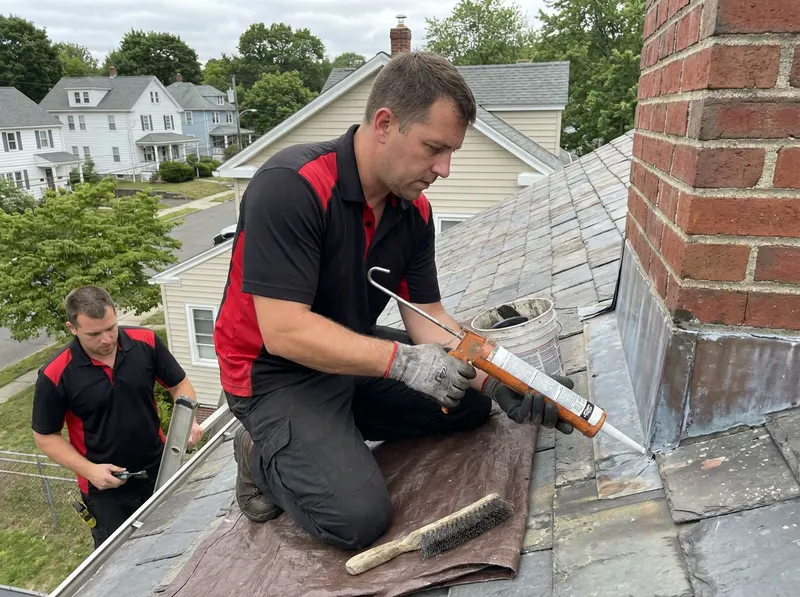
A leaking chimney rarely leaks where the stain shows up. Water enters at the top, a cracked concrete crown, a rusted or lifted flashing line where the chimney meets the roof, a missing rain cap, or brick that has absorbed years of Long Island Sound salt air, then travels down before it reaches a ceiling in the room below. Bridgeport homes near the water in Black Rock and the South End take the worst of the wind-driven rain off the Sound, so flashing and crown failures show up faster there than on sheltered streets in Brooklawn or the North End. Older brick chimneys around Mill Hill, the East Side, and the Hollow often have soft, weathered mortar joints that wick water straight through the masonry.
A leak inspection starts on the roof and at the crown, then moves to the flashing and the brick face. The four common leak points are the crown (the concrete slab on top), the cap (the metal cover over the flue), the flashing (the metal seal at the roofline), and the masonry itself. A cracked crown gets patched or rebuilt; failed flashing gets resealed or replaced; a missing cap gets a new stainless cap; and porous brick gets a breathable water-repellent sealer. The sealer is the key distinction, a proper chimney waterproofing product lets trapped moisture and vapor escape while blocking rain from the outside, which is why paint or non-breathable coatings actually trap water and speed spalling.
Deciding what you need depends on where the water enters. If the stain appears only during heavy, wind-driven rain and the brick looks dark and damp, the leak is usually masonry absorption and waterproofing is the fit. If water shows up in any rain and there is rust at the roofline, the flashing is the culprit and sealing or replacing it comes first. If the crown is cracked or crumbling, waterproofing over it will not hold, the crown gets repaired before any sealer goes on. The trade-off is straightforward: waterproofing alone is the cheaper, faster route but only works when the crown, cap, and flashing are already sound; skipping a structural repair to save money means the leak returns the next storm.
Every leak inspection follows recognized standards. A visual assessment aligns with a CSIA Level 1 inspection; when a leak has damaged the flue or the problem is hidden, a Level 2 inspection with camera scanning of the flue interior applies, consistent with NFPA 211 guidance for chimneys with a known performance problem. The inspection documents the failed component with photos so the repair scope is clear before any work begins. A free on-site estimate covers the roof and crown check and a written repair recommendation.
Every job gets a firm, written price after a free on-site visit.
Tell us about your chimney leak repair & waterproofing job in Bridgeport and we'll send a clear, written quote, usually the same day.
 Sweepmaster Chimney Sweep